Dr. Lorenzo Cervantes and his team at Connecticut Eye Specialists specialize in the care of patients diagnosed with keratoconus and corneal ectasia after refractive surgery.
What Is Keratoconus?
Keratoconus is a non-inflammatory condition of the cornea in which its typically round shape progressively thins and weakens. This progressive thinning is also known as ectasia.
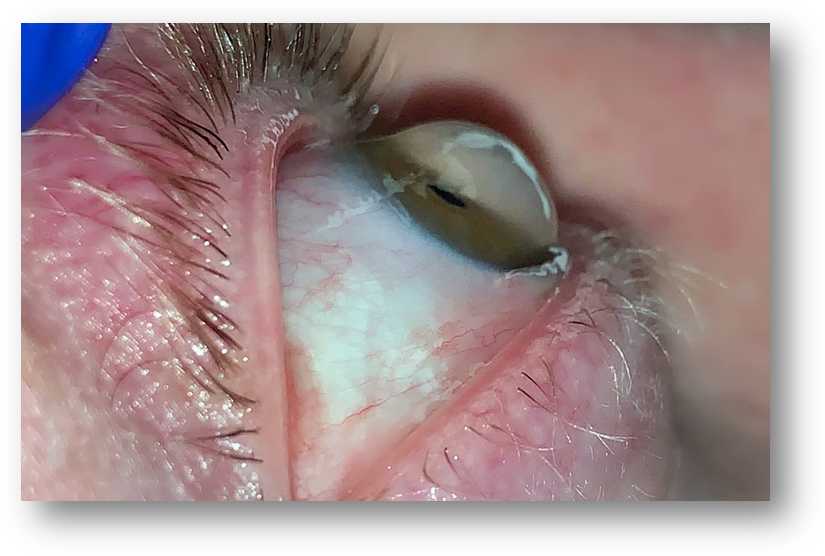
Keratoconus typically begins in early adolescence. It may continue to progress for several decades and then slow or stabilize in late adulthood. Each eye may be affected differently. It tends to run in families but appears to have a complex genetic inheritance pattern.
Environmental factors, especially eye rubbing, can play a role in its progression. There are also strong associations with other conditions, including severe allergies, Down syndrome, and other collagen vascular disorders.
What Are the Symptoms of Keratoconus?
In the early stages of keratoconus, symptoms may include:
- Blurred vision
- Sensitivity to light
- Frequent changes in glasses prescription, especially from increasing levels of nearsightedness and astigmatism
As keratoconus continues to advance, glasses or soft contact lenses alone may not be able to provide clear vision. With worsening irregular astigmatism, special contact lenses, such as rigid gas permeable or scleral lenses, may be necessary to see well.
In severe keratoconus, symptoms may include:
- Distorted vision
- Significant blurry vision despite glasses or contact lenses
- Sudden vision loss from corneal swelling
How Is Keratoconus Treated?
Treatment depends on the severity and progression of keratoconus, as well as the individual patient’s visual needs.